By Anonymous*
We wreck things at night and hold hands and skip all the way home. We are ever growing our informal support structures and we’ll always have each other’s backs. In our orgies, riots, and heists, we are articulating the collectivity of, and deepening, these ruptures.
– Mary Nardini Gang, Criminal Intimacy
The scene is euphoric—an atmosphere acrid, but alive, as a caustic fog saturates what was once an urbane city street, the sickly miasma punctuated by bursts of blinding light and steady sonic reverberations that clamber up your spine and careen around your skull. Fireworks explode in half-time somewhere nearby, insurgent polyphonic starbursts in a crackling barrage of boom and bap. Right wing pedophile journalists pace the periphery, hungry to consume their own self-imposed marginalization. A car collides into another amidst the obscurant chaos. Shadowy cads emerge from the ether as revolutionary detritus crunches meekly underfoot. They seek you out as if instinctually compelled to do so, blue-blood hyenas preying on an affectively perceived weakness, targeting femininity, faggotry, deviance. You evade, but others succumb to the cold arms of the law. You could just as easily be one of them, coughing and gasping as they claw at the air before being dragged backwards into it, disappearing as quickly as they materialized. More get taken and their shrill screams cleave the night in twain. Before long, you are improbably alone. A dampened silence falls. Time speeds up as your mouth sucks pointlessly for oxygen. You fixate on waterboarding and Guantanamo Bay, the boomeranged armature of terror that characterizes the State’s relationship to dissent, as you breathlessly sidestep bodies and barriers, your own legs free to run in a way they soon won’t be. The cloud breaks. An exit looms. Your mask comes down, but another remains. The spell is broken.
It’s no longer 2020. You blink and it’s 2023. All the exigencies of The Event have slipped into a brackish bravado of “remember when” propitiations, better situated as eulogies than the self-aggrandizing bombast they masquerade as. Flashbangs and fireworks give way to the banalities of rote survival. No more work from home, for those lucky enough to have ever had it. No more burning police precincts, broken windows, or molotov kisses. No more verdigris idols rended from their sanctimonious plinths—the orgiastic bliss of demolition. A last gasp neoliberal interregnum before the Fall. No more future at all.
COVID unassumingly leaves the cultural zeitgeist, now absent through sheer force of unconscious will, a cognitive dissonance as destructive as it is expected. Shoplifting is one moral panic amongst many, swelling, then receding just as quickly from the local media landscape, jumbled amidst aristocratic coronations and the wanton spectacle of genocide. Capital continually clamors for air and blood and some have the right mixture.
Yet, despite aspirations otherwise, things have not returned to normal. Graffitied plywood boards still adorn downtown corporate frontage, rueful totems for both a tired insurgency and the chamber of commerce culturati alike. A gnawing fascism eats at the hearts of the aggrieved upper-middle class, genealogically manifest in increasingly routine outbursts of stochastic violence. And your legs, which once worked so well, without a second thought, now exist in a state of staggeringly omnipresent inflammation. You will learn to live in a permanent state of anhedonia, meekly mired in recursive stagnation. You will grow to hate your own body, repulsed by its all-encompassing inadequacy.
Musculoskeletal pain: a deep electrically radiating sensation that leaves you unable to do much beyond fixating on the pain itself. Pain as autopoiesis. Pain as oppression, repression, and suppression. Pain that atomizes. Pain that holds no capacity for recuperation, much less prurience. Pain that is as cataclysmic as it is common.[1] Pain that melds with fatigue in a totalizing chimeric debility.
You’re experiencing what is colloquially known as a crash. Overexertion, or, even any exertion whatsoever, puts the body in crisis, a kind of inflammatory cascade failure wherein activity becomes a wretched game of rapidly diminishing returns. Exercise is impossible. Physical movement as simple as getting out of bed becomes arduous to the point of absurdity. Even seemingly passive activities like reading or watching TV can be enough to bring on a crash. Life becomes something to be avoided so as to better survive. Riot is a distant memory.
You wax and wane in bed, an unevenly setting concrete synecdoche. You attempt to bank enough energy to try to walk to the park and marvel at the warm feeling of sun on your air conditioned skin. You get only a few blocks before breaking down in tears, collapsing in on yourself at an unassuming food cart pod. Your scope of possibility shrinks as the coordinates of your world do and you feel it, existentially. Your life is now a single room, a bed and the gracious care of a loving partner. Cut off, you become bitter and misanthropic. You no longer compose music or write zines or throw rocks at trains. You no longer go to bars or go to the movies or dance. You no longer seek out friendship or camaraderie or flirtation. You neglect the relationships that remain out of pure exhaustion. And just as you have given up, the connections you have forged over years wither away. People stop texting or checking in. Some never started. No one invites you to anything because they know you won’t attend. Your already claustrophobic low-income enclosure squeezes at your sides. Your future isn’t just mortgaged, it is foreclosed. The 3rd precinct isn’t burning anymore, your insufferable hopes and dreams are. You wonder how different they might smell in their conflagration, both aerosolizing a mesothelial impertinence.
You make plans to die if you haven’t improved by an arbitrarily distant date.
It was somewhere around the third straight month of daily action in 2020 that you began to feel different. This was no longer an insurrection, it was a job. Clock in to the oppression factory, get the shit kicked out of you by a diverse array of law enforcement personnel, inhale dangerous particulate that the Geneva Gas Protocol of 1925 and the Chemical Weapons Convention of 1997 banned from warfare but sympathetically retained for “riot control situations,” then clock out and begin the cycle anew.[2]

You research the detrimental health effects of CS and OC gas, the most common lachrymatory agents currently deployed.[3] You chart uses of force nationwide in increasingly tedious data visualizations. “Knowing” becomes your philosophical means of “mastering” the horror. Viral taxonomy, epidemiology, contact tracing, drug trials. You start, then are compelled to stop, taking hormones. Your friends start having weird medical complications: menstrual irregularities, uncontrollable coughing fits, blood pressure spikes, seizures. At the same time a new diagnostic assemblage enters the cultural lexicon, postural orthostatic tachycardia syndrome, ataxia, cytokine storms, brain fog, microclots, post-exertional malaise, stellate ganglion blockage. You speculate on where the fascism ends and the long-COVID begins. In the background an infinite scroll rails against the terminal epidemic of “male loneliness,” mewling elegies for the limitless potential lost in white boy spree killers. Increasing numbers of poor and debilitated people quietly disappear from public life. Disability becomes the undelineated topography of a post-insurrectionary landscape.
As obvious as it is unremarked upon, the uprising emerged out of the pandemic, a phenomenon you now refer to in the past tense (e.g., “that was during the pandemic” by which you mean either the relatively brief window of lockdown in the US, or up to a year or so later when inadherence to the urgency of masking, social distancing, and other prophylactic measures carried a more unbearable social cost). The forgetting was a collective reprieve, the gloomy weight of ethical responsibility lifted from the world’s weary shoulders.
Yet, despite the horrors of that time—refrigerated trucks overflowing with corpses, supply chain catastrophe, paralyzing uncertainty about your job and your friends—you remember something capacitating. You recall the erotic joy of mutual destruction. Of solidarity. Of reveling in the demolition of those simpering symbols of capitalist infallibility. You once felt alive. You could sprint for blocks without consequence; you could spit in the face of hot-dog-toned roid-raging stormtroopers; you could scream nonsense for hours as DIY anti-gentrification action; you could get hit by a car for fun.
You’re otherwise housebound, but your job has opted to no longer afford a “remote option.” This means that you will drag yourself out of bed and trudge to work. Your legs are like lead weights, exhausting even the most elementary movements. Your bones emit bile in a terminally chemical ache. Your brain slowly leaks from the base of your skull like a perforated barf bag. You will sacrifice long term health for the short-term necessity of a meager paycheck with no benefits. Your body will radiate pain so pronounced that you dissociate, ironically lecturing on things like the social model of disability and the labor theory of value, astral projecting miles above the wan carapace you once cavalierly called a self; a phrenic masochism stretched well beyond its lewd limits. Still, the contradictions are comforting: the robotic choreography of adjunctified academic labor, the occupation of space with others blissfully ignorant to your abject suffering.
In 2021 your revolutionary affect was in a more liminal space. Actively burning out, the footsoldiers of the uprising began to take their collective foot off the accelerator. The technicians of partisan logistics, thaumaturges of horizontal fundraising, guerrilla street fighters, therapists, and caregivers impelled to retreat from the queer horizon of radical possibility. Let’s Go Brandon, the clarion call on the plastically turgid lips of a rejuvenating right. You didn’t understand then what you can’t escape knowing now; a once disastrously categorical allegiance to sheer force of will. Pushing through, you called it. A seventy-five-straight-day-tour-of-duty, with more deployments to come. To succeed, only a matter of stolidly resisting the circuitry of institutional power in perpetuity. To fail, an enfeebled capitulation at the divine altar of would-be-pertinacity.
You had a friend who made this misapprehension obvious. One COVID-Cassandra sinking in a sea of many more, embodying the costs of wrangling with the leviathine junction of fascism and pandemic. They guided queer comrades in the tactile praxis of Brazilian jiu-jitsu. They outed abusers in the community and shared information across the scene, showing up regularly to no-platform cross-polinating cadres of white nationalist sycophants and TERF ideologues. But perhaps most presciently, they helped build networks of interstate trans solidarity. They cared for friends who were acutely sick, or chronically ill, or anxious or depressed. They shared the meager resources that they had with those who often had less than nothing, the tranny street walkers, oogles, fentanyl addicts, and assorted gender trash unpolished enough to wage successful social media campaigns to survive. They too hit a brick wall, earlier than you, but no one was there to help.
You remember when they died. Hours before your planned trip across the country. Your first since the pandemic—an obligatory validation of the heterosexual union—a ritualistic means of securing and enshrining a future for property rights claims. The dissonance of marriage and carnage is palpable. You are reminded of their unrequited desire, serpentine, impossible to straighten. The phone rings. You feel a dizzying social inertia: here is who is supposed to live, here is who is supposed to die. The unequal claimants to an order momentarily in disarray, contended in the streets of Minneapolis and Portland and Kenosha and Atlanta, reassembled and ossified in the aftermath. The would-be usurpers fated to sink back into the immiserated sludge they dared emerge from.
You no longer find them sleeping on your couch. You no longer share a bummed cigarette. You no longer wake to their seizing body, preemptively exhausted from the care to be meted out. It was the pain that killed them. It was the fatigue that killed them. It was the pandemic that killed them. 2020 killed them, a slow death years before those sequelae rendered you obsolete in much the same way.
Real suffering was an abstraction to you until it wasn’t, despite your sub-median American poverty, ascendant social justice credentials, and your depression, anxiety, and perpetual dread. All the while you’ll wield limitless statistics—figures of a twisted agony that ultimately exists to uphold the evidentiary tenets of a liberal cosmology. Pity as the barely patinated scorn of the rightful elite, a laminate veneer which nevertheless makes apparent that which should be seen and that which shouldn’t: the discursive tendrils of an acceptable genocide, the one-way glass of the class divide.
You blink again and it’s 2025. You survived. Your condition slowly betters with time. You can walk and work with less pain, without anyone noticing your shortcomings, thereby reasserting your positionality amongst the capable, the productive, the able-bodied. You fling yourself headlong into action. You embrace the barest return of your faculties with unbridled vigor. You organize and write and dance and drink in tempered excess. You’re compelled to forget your still present debility by a world which has moved on. You overdo it by walking a thousand steps instead of nine-hundred and you crash again. The specters of your cloistered trauma rush inwards to fill the vacuum. You stare into the gaping maw of a vertiginous pessimism. Yet unlike before, you step back from the abyss, chastened by the taste of recovery. You continue to work. You talk more brazenly with co-workers. You ritualistically swallow Buspar, Prozac, low-dose-Naltrexone, Vitamin D3. Your spirits rise.
It is work which has, in concert with the uprising and the virus itself, wrecked you. But the temptation to ascribe any kind of improvement to “work” is palpable. Work is where you are seen. Labor is where you are useful. You yearn to escape being burdensome. How thinly veiled the contradiction: your newfound vigor doesn’t come from your ability to be successfully commodified, or any particular vocational aptitude (perceptions you had long ago politically internalized), or from any clear process of rehabilitation. You start taking hormones again.
You feel in your ascending ability a libidinal drive towards obliteration, an incipient organizational impetus, squeezing from above and below. Not the apocalyptic bourgeois nihilism of your betters, nor the vulgar accelerationism of the revolutionary-goon-squads, but an alternative remaking emergent in the chrysalis of catastrophe. You begin to liken it to a car crash, maybe more like a refiguring of the film Crash. A sweet song: the orthogonal impact of new-world, present, and old, of gender, disability, and desire screaming metal on corroded metal.
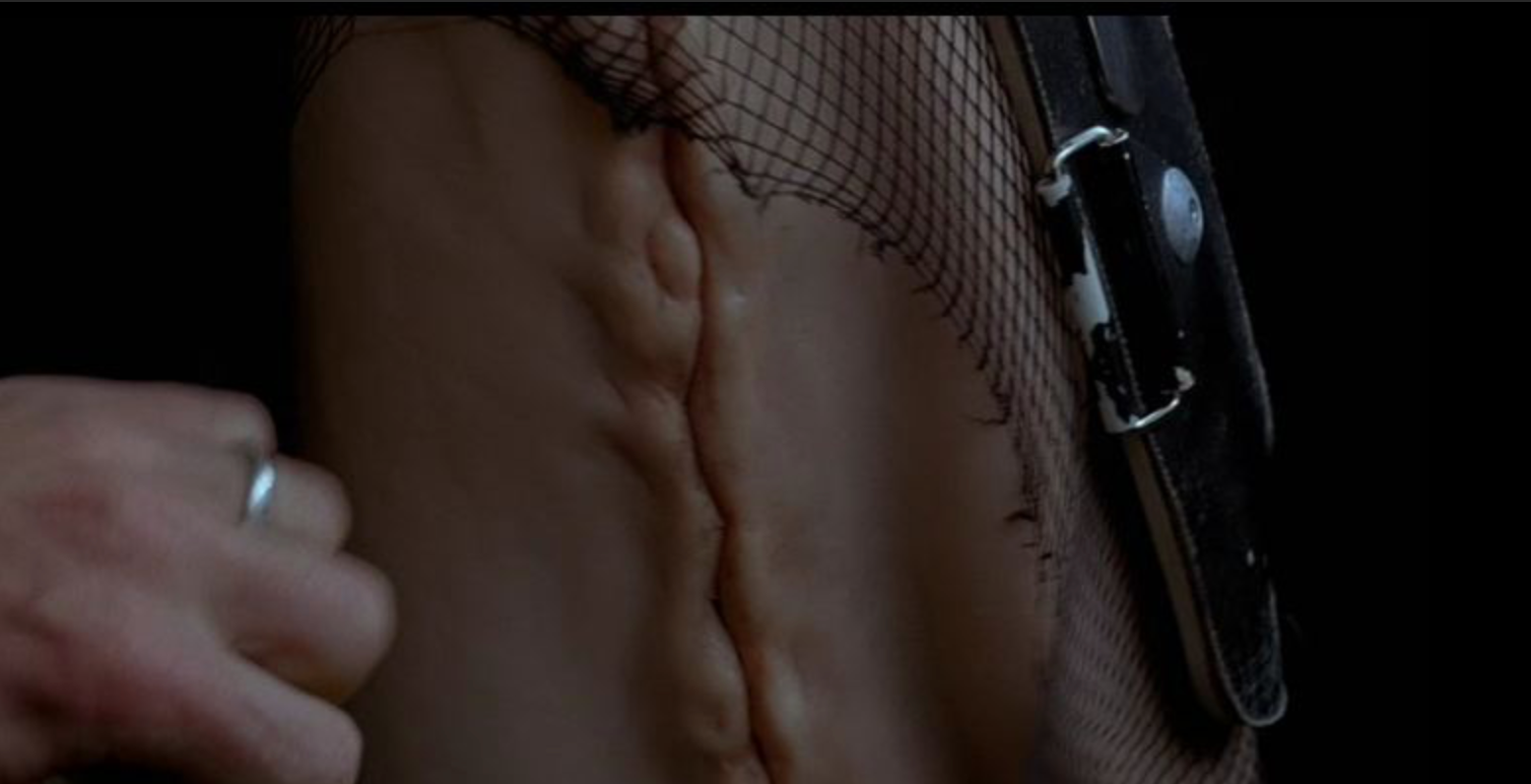
A man, of course, is waiting, ready to strike you down. In 1984’s, “Paraphilias: Phenomenology and Classification” John Money pathologizes your predilection as symphorophilia, an “unusual” erotic attachment to disaster—part of a contingent of paraphilias described as “sacrificial,” or, “those in which one or both of the partners must atone for [their] wicked and degenerate acts.”[4] You don’t feel particularly penitent, but the medical industry nevertheless imposes on you both the gratuity of catastrophe and a certain corresponding vicarious thrill. Your long abandoned therapist intoned much the same when you talked about the things you couldn’t talk about. Put another way, as Money quips, “as a photographic print is the positive made from its negative, so also the positive of self-crashing is arranging for disaster to occur on the highway, and then watching the carnage.”[5]
You feel interpellated. You do savor the feeling of calamity; the sticky sweetness of collapse; the indefinite thrill of potential. And, more than simply taking voyeuristic pleasure in the disorder, you actively engender it.
But, you realize, while you never really orchestrated carnage, now you are the carnage—the mangled half-digested ordure of a recurring sacrificial feast.
What makes you so ripe for oblation? Supposedly, this is an attachment intimately bound to your other alleged perversions. What unites the paraphilias is their displacement of “normal” heterosexual desire. Money claims:
The tragedy that deprived the paraphiliac of heterosexual normality was the neglect and/or abuse of the rehearsal play and development of early life, and the paraphilic substitute that took its place. The triumph was that lust and its arousal was saved from total wreckage or extinction by being transferred to some other less prevented and at the time less censored, but paraphilic rehearsal. It was a hollow triumph, alas, for in later years it would bring more tragedy, as paraphilia so often does.[6]
“Tragedy?” you wearily opine. What absent dissonance speaks in tongues, indecipherable to your wounded sexuality? Your privation is no adolescent lack. Revealed amidst the ruins, emergent in a lifelong inadherence to formal rectitude, you are nevertheless marionetted to the cruel cadence of a crescendoing normalcy. Yet against this compelled propriety, a materializing revolt. A practice: a ribald reorientation of desire, a pregnant and sumptuously arising transsexual criminality.
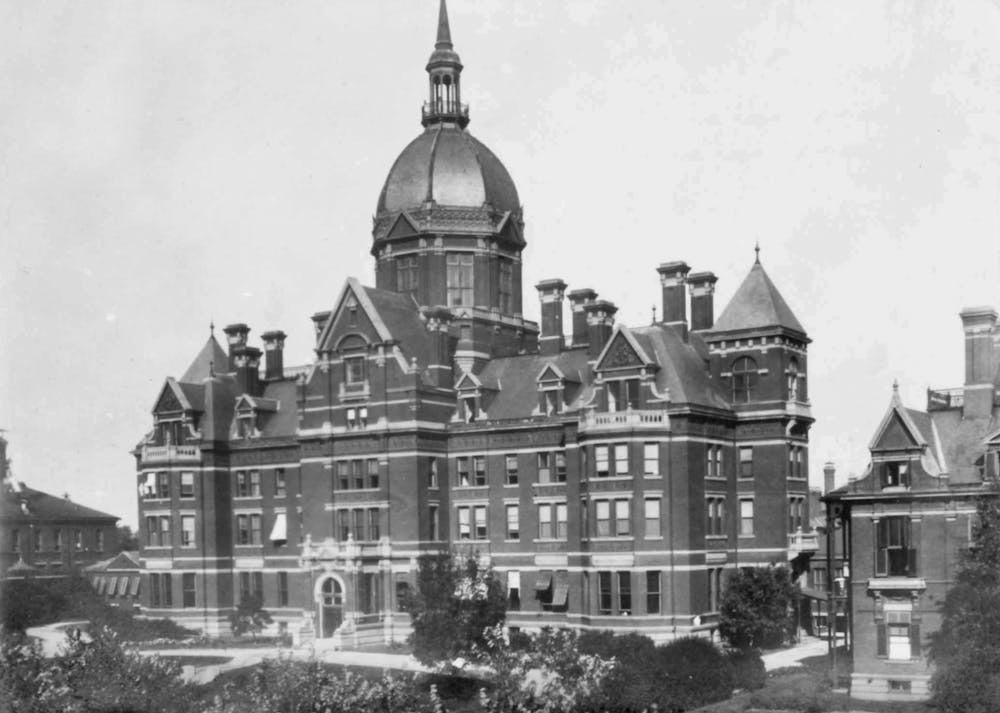
Some twenty years before “Paraphilias,” in 1965, Money helped found the Gender Identity Clinic at Johns Hopkins University, thereby helping to produce a plastic transsexual typology; a medicalized pathway to potential normality. As Jules Gill-Peterson outlines in Histories of the Transgender Child, prior to the official opening of the clinic, Money and his colleagues recruited a prospective patient, the seventeen year old “G.L.,” who in lieu of incarceration was court ordered to a ward at Hopkins for compulsory treatment. Gill-Peterson writes, “The judge was convinced by Money and his peers that the defendant’s criminal record was really a side effect of a misunderstood medical condition, ‘transsexualism,’ and that surgery would break a spell of delinquency, arrest, and state institutionalization that stretched back some five years.”[7] You see in this the categorical mobilization of trans childhood as racialized potential. You see the institutional and biopolitical imperatives of the medical industry. But more than this, you see an attempt to instill and then foreclose the criminal auspices of gender. You see the wreckage.
Money’s conclusion in “Paraphilias,” a throughline also manifest in his work at the Johns Hopkins clinic, is that there are medical solutions to the typically carceral problem of paraphilias which should be treated as addictions to unnatural desires. Your mind immediately goes to disorder, noting its twinned mechanisms of disability and liberty. You linger on the subsumed carcerality of the clinic itself. On the practical means to survival criminality provides. On G.L. unethically compelled to be experimented on. On their liberatory flight from the Janus-faced oubliette.
Money ultimately proposes a pharmaceutical solution to the problem of paraphilias, the use of cyproterone acetate, an anti-androgen. He argues that across the paraphilic spectrum (from pedophilia, to scoptophilia, to symphorophilia) this “diminishes the subjective experience of sex drive and, in addition, may have a direct erotically tranquilizing action on erotosexual pathways in the brain.”[8] To crush your pathological desires, even in prescribing a pathway to transsexuality, Money asserts you don’t have to quell desire writ large, only that which interferes with “heterosexual normality” and the smooth workings of the law. Whether in lusty car wrecks or queer transsexuality, heterosexuality is displaced as the object of normative desire—an apocalyptic alternative for the ruling order. You think about USA Gymnastics, NXIVM, the LDS Church, Roman Polanski, and Jeffrey Epstein; the paterfamilias; the kinds of normalcy heterosexuality compels; an uneven criminal terrain. More than this, you think about power.
In 1989, Ray Blanchard tweaked Money’s line of thinking in introducing the concept of autogynephilia, further entrenching transness amidst the perverse attachments to the “unusual.” To Blanchard, there were two subtypes of MtF transsexual, the latent homosexual, attracted to men, and the autogynephiliac, who fetishized the love of oneself as a woman. Blanchard’s dual classification would prove fruitful for decades of transphobes to come. Indeed, what could be more horrifying to society than desiring oneself as a faggot (and/or) woman—those gelded symbols of social impotence?
There is also a unifying threat latent in both: the specter of criminal and political transgression.[9] As arch-transphobe Helen Joyce writes in her duplicitous tome, Trans: When Ideology Meets Reality:
Gender dysphoria and cross-sex identification were related to sexuality in two separate and quite different ways. But the rise of left-wing identity politics and the determination to bury the concept of autogynephilia meant that, as trans people became more common and visible, this complex, nuanced picture of transness was simplified and erased.[10]
Yet, you have no dogmatic adherence to any of these alleged touchstones. You don’t see radical possibility in rote opposition to a binary. Your transness emerged not from an identitarian idealization of gender, that ancient arbiter of power, but from its annihilation. The cobwebbed instruments in your head begin creakily turning to life.
The scholarly rejoinders to Money and Blanchard have been myriad, primarily (and correctly) arguing that their findings are unscientific, deceptive, and stigmatizing.[11] But you are less interested in “proving them wrong” than in understanding the larger social impetus against a mutually constitutive transness and criminality they are so keen on leveling and in making useful a lived practice of exactly that.[12] Not a banal philosophy of: What is a woman? But why transness has become an overarching threat to its stability as a category, the absolute form of gender wrongness Frankensteined into life and imbued with immense political utility. This cannot be solely a medical endeavor, of course. In culture, economy, law, and ideology writ large, you are also addressed, announcing and normalizing a criminality that wouldn’t otherwise exist. Disorder and disorders, an answer unfolds: what is meant to be and what isn’t; always a post-hoc justification to maintain the political horizon.
You return to the scene of the accident.
To détourne Mike Tyson, everyone has abstract understandings of power until they get hit in the face. A car crash is a fracturing event. It isn’t “supposed” to happen. The accident makes plain the fiction of absolute order, a rupture with the smooth flow of authoritarian time. It is a meeting point of structure and chance. In this, force is about collision, but it is more so about power; the kinetic and the discursive in mutual constitution. With enough force a crash leaves the body unable to look or work the same way. It is its underlying social dynamics, however, which both prefigure and determine the consequences therein. What were the condition of the roads? What kind of car were you in? Do you have insurance? Is it good insurance? Is your ailment covered? Can you get disability? Your COVID crash is part of a similar web of institutional prejudice. It is also transformational, materially and ideologically changing your immune response, your political perspectives, your ambitions, your relationships, your finances.
A crash is not enjoyable. It was and continues to be horrifying and traumatizing, a leviathan constriction of world and self, the kind of thing you only wish on your worst enemies. But it is clarifying. You mask and are vaccinated. You are what many would call “overly” COVID-cautious. There is no reason you’ve been afflicted while others haven’t. There is no choice you could have made otherwise. You recognize, despite its discrete effects, a pandemic is not just an individuated phenomenon, but a social one, a structurally compelled demobilization that Jasbir Puar calls debility.
The crash, however, also illuminates the inevitability of the after and the before. It cleaves time, an interruption that torpedoes regularity and stasis. In the thick of it, it feels very much the opposite, all you have is flat, unchanging, time–everything is pain and fatigue–it seems as if there could never be an otherwise. Yet, history has not come to an end. Ruptures abound, waiting to be exploited. As surely as the last insurrection emerged, there will be another.
How can it work this time? How to recognize the forest and the trees? How to be shaken from the idle stupor of overwhelming despair? How to discern in these moments of “failure,” possibility and to act. These too, are questions of desire. There is an implicit yearning to seek the wreckage, but not to be wrecked; to preempt, postpone, or altogether avoid pain. In many ways, this is an unattainable fantasy of a world without change or consequence. There will always be a cost. These are practical realities: you will age; your body will no longer function the way it has in the past; you will experience trauma from the necessary actions you take against fascism; people you care about will abandon you; people you care about will care for you; at some point, you will die. This is what a politics of wrecking in the crash is, a means of assailing those architectures of power that deny the collective flourishing of life and building a lively alternative in its place despite the consequences, working instead to lessen them for those who come next. You envision a great big battering ram, actualizing a habitable future in splintering the now. And criminality becomes the necessary means across this temporal divide, a disregard, a practice towards being autonomous.
Just as automotive or COVID crashes are disjunctures, so too is the riot. It alternatively obstructs an otherwise unabated flow of capital and state power, leaving scorch marks on the streets and the minds of the plutocrats alike. Transness wields something similar, a radical departure from that which is supposed to be; a repudiation of the naturalizing dictates of gender. Here, also, is an overflowing desire where there shouldn’t be. An impediment where there shouldn’t be. An autonomy where there shouldn’t be. Your perversions become impossible to disaggregate from your politics—your disability impossible to disaggregate from your perversions.
Your transness is not a product of adherence to a legible aesthetic, or a set of embodied traits.
Your transness is criminal.
You saw it refracted between the glossy helmets of the gestapo and the swollen crowd, prismatic and bright in the milky dusk: a transness quite literally born in flames.
Its object of desire is not womanhood, but freedom..
What, then, can your liberated debauchery enable? On the surface, to people like Joyce and Blanchard and J. Michael Bailey, it is merely pornographic. Transness is alleged to be a fetish, a categorical disobedience to the natural order of things that perversely appropriates the authentic essence of male-ness or female-ness. Joyce, specifically, contrasts the “objective basis” of biological sex against the “ideological” circuitry of gender self-determination, rendering autonomy and transness linked in the negative.[13] You find this useful: cis-ness as a cocoon trapped in stasis, fated to the circumstances of its birth, unable to imagine an otherwise; transness as a practice of autonomy, wedding the material and the ideological. To Kant, autonomy is the capacity of an agent to act in accordance with objective morality rather than under the influence of desires. To you, autonomy is the freedom to desire and engender that otherwise, something possible only in disregarding the law.
You dwell more on pornography, not the lively expressions of affirming queer sexuality your friends engage in, but its exanimate capture: work-porn, inspiration-porn, tragedy-porn, barely-legal-porn, tranny-porn—mechanisms of mediated spectacle, an attempted mastery for making useful to capital or patriarchy or the State. You see a generative overlap with the discourse of paraphilia, attachments to order where terminal heterosexuality and gender normativity collide; attempts to capture and coopt that which is threatening by alternatively rendering it criminal and/or commodifiable. What is missing is not the law, or its extension in the proscriptions of gender, but an ethics that doesn’t have to rely on either.
You find that your well-being improves with the return of community and purpose. Just as pain autopoietically reproduces, so too can yen, desire manifesting desire. Where once you saw only a collapsing concrete cage, now you see solidarity in friends, partners, and comrades. You also find that your long covid symptoms improve after you start taking progesterone, a particularly effective means of reducing inflammation in the body.[14] Your lust for life returns. Your drive for obliteration remains, but is augmented with possibility. Transness saved your life. Not just in a pharmaceutical regimen, but in the people across. A trans partner. Trans friends. Criminals, us all.[15]
Crime is any activity in violation of the laws of the State. A state we witness legally strip loved ones from each other to uphold the arbitrary legitimacy of borders. A state we see wantonly and legally execute people of color for their mere existence. A state we know surveils, abuses, and assaults children for its own amusement. A state which decries the illegality of indigenous livelihood and queer education. A state whose highest court routinely punishes gender disobedience. This is a semiotic equivalence only gaining further purchase in the fascist milieu of 2026, trans = crime. It is meant in the pejorative, a way to dehumanize so as to better control a marginalized population. We see it differently.
John Money espoused this proclivity in its embryonic liberal form, actively compelling a normalized heterosexuality, not as a means in and of itself, but in conjunction with a social docility he could only imagine emerging from a restriction on “male” desire to reduce crime. The seeds of such aspersions have proved fruitful to the ongoing project of fascism in the US and beyond.[16] Fascists, however, also mobilize particular kinds of desire, even as they anesthetize others. They promulgate an enthusiasm for a fictive past. They crave hierarchy and domination. They lust after power and its wanton application. Even still, why would we ever cede desire’s promiscuous terrain? Desire is also the animus for a future, without which we are ordained to succumb to a doomerist autophagy. It, instead, must abound, born from a horizontal ethics which seeks to destroy the very foundations of power that enable such cataclysmic abuses.[17] An ethics which genuinely values the principles of autonomy and consent. An ethics capable of resilience and desire. An ethical criminality. A transness.[18]
What does this entail? To expand the limits of our desire and put them into practice. We desire destruction of the now. We desire agency. We desire love and freedom and solidarity and possibility. And in gender and political autonomy we practice it. We see a car wreck. We help.[19] We see someone on the street without clothes or food. We build a mutual aid hub. We see that someone we care about has lost their job. We set up a fundraiser for them. We see a longing. We kiss each other deeply. Our bodies hurt and they will forever. We inject 5mg of estradiol valerate and stare into the dawn’s expanse, sunrise burning off the lingering haze, the morning call of the black-capped chickadee and the song sparrow beckoning us back into a world of possibility.
And then we crash again.
Notes
[1] Estimates vary wildly, but the WHO estimates that about 6% of people who have gotten COVID have some kind of lingering post-viral symptoms for at least two months. And of those 6% about 15% still have symptoms after a year. Given the massive number of COVID infections, these numbers are likely in the millions, just in the US.
[2] “Practice relating to Rule 75. Riot Control Agents” https://ihl-databases.icrc.org/en/customary-ihl/v2/rule75
[3] “Tear gas tuesday in downtown Portland” Forensic Architecture (2023) https://www.forensicarchitecture.org/investigation/tear-gas-tuesday-in-downtown-portland
[4] Money J. (1984). Paraphilias: phenomenology and classification. American journal of psychotherapy, 38(2), 168. https://doi.org/10.1176/appi.psychotherapy.1984.38.2.164
[5] Money, 169.
[6] Money, 175. Emphasis mine.
[7] Gill-Peterson, J. (2018). Histories of the Transgender Child. University of Minnesota Press. https://doi.org/10.5749/j.ctv75d87g 130. Emphasis mine.
[8] Money, 178.
[9] It is not a coincidence that both J. Michael Bailey and Blanchard were members of the Human Biodiversity Project, a racist pseduo-scientific organization founded by Steve Sailer, who also has connections to the white nationalist website VDARE. In this and many other ways the connections between white supremacy and anti-transness run deep.
[10] Joyce, Helen. 2022. Trans : When Ideology Meets Reality. Updated ebook edition. London, England: Oneworld Publications. http://public.eblib.com/choice/PublicFullRecord.aspx?p=6638166.“Whether or not transition makes people happier is an important question for individuals and clinicians, especially when it involves irreversible hormonal or surgical interventions. But it is irrelevant to evaluating the truth of gender-identity ideology, and to whether self-declared gender should replace sex across society.”
[11] Serano, Julia M.(2010) ‘The Case Against Autogynephilia’, International Journal of Transgenderism, 12:3, 176 — 187.
[12] In Money are two paradoxical assumptions: the first is that the drive to criminality is a masculine urge, one that can only be counteracted in some form of chemical castration. The second is that any perversion of the standing legitimacy of “natural gender” is itself criminal. Together these cohere in a structural legitimation of the standing order, that only men can be powerful and it is disabling for anyone to want to abandon that position. In effect, the penalty for inadherence to the dictates of the law is compulsory transness, rendering one a criminal ward of the state. In contrast a trans criminality recognizes the illegitimacy of gender as arbiter of power, the role the state plays in such an oppressive dynamic, and the means through which autonomy can be achieved by undermining the very dictates of the law.
[13] Of course, Joyce is also wrong in her claims about biological sex, but that is well-trodden territory.
[14] Lovre, D., Qadir, M.M.F., Bateman, K. et al. Acute estradiol and progesterone therapy in hospitalized adults to reduce COVID-19 severity: a randomized control trial. Sci Rep 14, 22732 (2024). https://doi.org/10.1038/s41598-024-73263-5
[15] You think about the overrepresentation of women amongst people who experience autoimmune disorders, cis and trans. You think about the people with ME/CFS and Fibromyalgia disbelieved and spurned at doctor’s offices. You think about the pharmacopornographic politics of viagra, testosterone, and nootropics. You think about the comorbidity of ADHD and autism and their prevalence amongst trans people. You think about the use of cyproterone acetate by trans-femmes in Europe, recasting a means of obliterating eros into its joyous flourishing. You think about local graffiti legend PenisGirl. You think about all of the people locked in prisons for the accidents of birth or circumstance. You think about willful means of control. You think about autonomy. You think about crime.
[16] That his solution coincides with HRT protocols is not just a “happy” accident of history, but a fundamentally exploitable weakness in the resilience of authoritarianism. He has this in common with the police who have beaten you your whole life, to compel a foreclosure of your ability to resist, only to incite an opposition more vital than it would have been otherwise. So too with a society that denies the continual effects of COVID, both out of a willful neglect of scientific reality and to pave over the inconvenience of disability, much less the actual desires of disabled people, criminalizing resistance in the process. In these and beyond, the crash has already happened. No allegiance to fantasies otherwise will change that.
[17] You anticipate a Foucauldian critique, decrying the discursive trap of liberatory desire, highlighting those failed sexual projects of the 60s. As if sex or even sexuality was the limit of desire. As if the academic treatment of diffuse power has done anything to challenge it, much less destroy it. As if transgression was your aim, rather than dismissal. David Graeber writes that “direct action is the insistence, when faced with structures of unjust authority, on acting as if one is already free.” The path to that insistence is desire. What could be more trans? What could be more criminal?
[18] As the Mary Nardini Gang argues, “In our crime, we create dynamic new relationships of criminal intimacies. In these possibilities, we are learning how we might, together, reduce this world to rubble.” Transness is one such wrecking, a reveling in ethical perversion. Insurrection, whether the last or the one to come is in part about such manifestations of desire. Not desire as a simple inversion. Contra Money, you don’t desire destruction for its own sake, to atone for some forgotten sins, or to delimit legal transgression. The law is at best incidental and at worst actively antagonistic to an effective ethics. Its dictates oblige a vulgar criminality across the expanse of its injustice.
[19] Not every car crash has a voluminous impact. You have to find them.
 blindfieldjournal.com