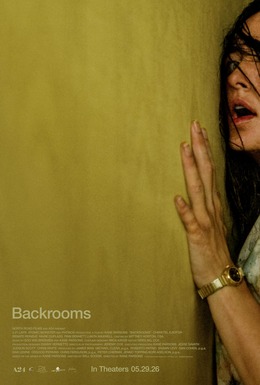
By Jess Flarity
“The color is repellant, almost revolting; a smouldering unclean yellow…the color is hideous enough, and unreliable enough, and infuriating enough, but the pattern is torturing…It slaps you in the face, knocks you down, and tramples upon you. It is like a bad dream.”
—The Yellow Wall-Paper (Charlotte Perkins Gilman)
**REVIEW CONTAINS MASSIVE SPOILERS…for all kinds of Backrooms-related things**
It’s 2026 and the iPad kids have metamorphosed into Instagram and TikTok teens: they are our first true cyberpunks, having lived their entire lives with one foot in the digital world and the other in the “real.” So it’s not surprising that Backrooms (2026), a horror movie about a liminal pseudospace existing alongside the real one, is one of the most popular films of the year*. The movie is also directed by a Gen Z YouTuber just on the verge of his 21st birthday, hinting at a paradigm shift coming to Hollywood. While Kane Parsons did not invent “The Backrooms,” which started as a creepypasta (internet folk tale) in the primordial ooze of 4chan in the late 2010s, he has successfully translated this sprawling online universe into a(n) (in)digestible feature film and captured audiences worldwide with its surreal “normcore” landscapes.
While many critics hail the movie as a modern masterpiece, some fans are disappointed by Parsons’ creative choices, as the film eschews his YouTube series themes of exploration and sinister corporations (though this is hinted at) for metaphors related to cognitive dissonance and trauma in the main characters, Clark and Mary. This shift did not hurt the movie’s popularity, but I will argue that the plot leans heavily into mental health issues based on gendered stereotypes; beneath its Dali-esque, sinister dazzle, the bones of the film read almost like someone who’s just finished a Psych 100 course (“im14andthisisdeep”), though the superb acting, soundtrack, and set design distract enough for this realization to settle in only after the credits have rolled. This review will begin with a brief history of settings as manifestations of mental health issues in stories that have potentially inspired the film, continue to explore the stereotypes in the psyches of the main characters, and finish with the observations as to how Parsons and his co-writer Will Soodik were able to give the film mass appeal** in the age of our ubiquitous internet.
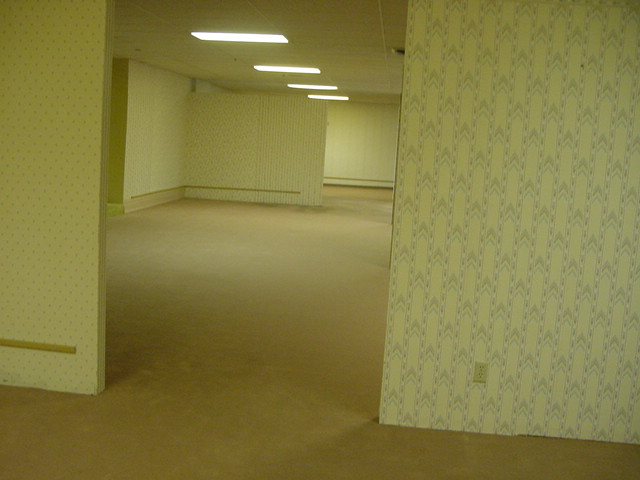
Figure 1. Oshkosh, Wisconsin, where the evil things B’gosh (2002).
Sinister Settings: Deteriorating Mental Health and Environments
Let’s begin with the iconic Backrooms color scheme: the urine-tinted, bile-ochre mustard that Home Depot would probably optimistically label as “golden buttercream dandelion dawn.” This uncomfortable yellow, which stems from the original 2002 picture posted to 4chan as the inspiration for the fandom, may be a subconscious callback to Charlotte Perkins Gilman’s “The Yellow Wall-Paper” (1892), a story which details Gilman’s own experience with insanity after a three month “rest cure” left her clawing at the walls. Along with Sylvia Plath’s The Bell Jar (1963), this story is a highly influential work of literature detailing (white, middle-class) women’s mental health in the United States and it is still assigned to high schoolers across the country***, which helps explain why the color scheme in the original photo became such a touchstone; it is the antithesis to the visual joy of a bright, cotton candy Barbie pink. For Parsons, this high school reading isn’t very far in his rearview mirror—he even included “The Yellow Wall-Paper” in the latest edition of the A24 “zine,” as he states in the introduction:
“When structured input is removed, the brain will hallucinate structure…[our lack of purposeful daily activities] have become psychotic ambient features of industrialized life…We are, as a species, parsing wallpaper at an extraordinary scale (III)”- Issue 33, Source
While Parsons believes that the Backrooms are a side effect of living in a highly technocratic and industrialized society, as a media artifact, the film itself is more similar to the Blair Witch Project (1999) due to its use of found footage and viral, word-of-mouth advertising campaign. I was a 15-year-old freshman in high school when Blair Witch came out, so I remember the whispers among friends about how the movie was so disturbing that it caused people to throw up in the theater, that the witch was actually real, that the people who filmed it were really missing, etc. etc. etc. An enormous part of the appeal of this kind of horror is in the fantasy of its authenticity; the pixelated graininess of the cheap camera gives it that 8mm (1999) snuff film quality. But my peers who saw the movie in the theater back in ‘99 told me it was lame (apparently, people threw up from motion sickness) and after watching the movie a few years later on a rented VHS, I remember being much more terrified of The Ring (2002), though my threshold for horror is fairly low. Backrooms is a generational return to Blair Witch, as the film has already grossed over $300 million worldwide on a $10 million budget, and I imagine the same whispers have spread its growth on modern high school campuses: the Backrooms are a real place, there is an actual government cover-up, the original footage was from someone who disappeared, you can “no clip” into the space by stepping in the wrong spot, etc. etc. etc.
A more overt comparison to Parsons’ interpretation of the Backrooms is via his direct inspiration from the fractured mindscape of Mr. Robot (2015-19), which is obviously where the patient-therapist relationship of Clark and Mary stems from, though the creepypasta itself also influenced the acclaimed Severance (2022—). However, our fear of endless, liminal environments goes back all the way to the Greek myth of the Minotaur and the Labyrinth; there’s even a scene in the movie where a rope is employed, reminiscent of the string Ariadne gives to Theseus, though anyone who knows horror tropes (caution: Tvtropes link, the writer’s equivalent to the Backrooms) knows exactly that only bad things happen when you get tied to a rope.
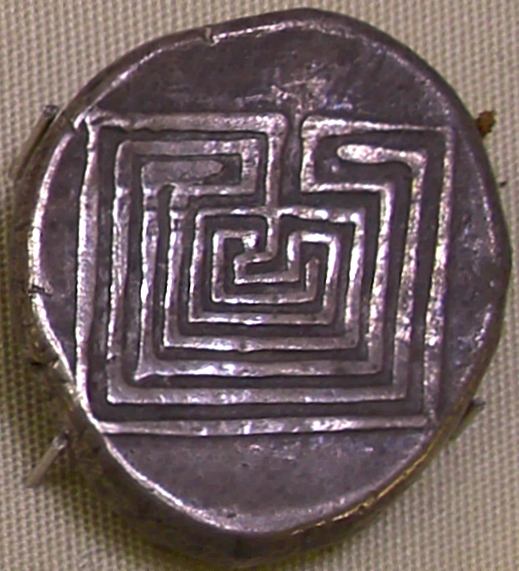
Figure 2. Silver coin from Knossos (Crete), scaring the pants off peasants since 400 B.C.E.
In the science fiction world, Backrooms is the kind of story we might call an “infinite space” narrative, which goes back to the Heinlein classic “And He Built a Crooked House—” (1941) as well as Borges “The Library of Babel” (also 1941, something in the ether that year), but I think the closest progenitor is actually Disch’s “Descending” (1964), an absurdist horror piece about a man who takes a subway escalator deeper and deeper until he realizes he’s so far down, hundreds of impossible stories worth, that he can’t hope to survive to make it back to the surface (spoiler: he decides to keep going down and then either dies or goes insane). Other works that I admire in this vein are Ballard’s “Report on an Unidentified Space Station” (1984) and the anime Blame! (2017), which is based on a manga set in the far, far future where the entire solar system has been consumed to build a mega-structure so fantastically large that in one dramatic scene, the protagonist has to walk across a spherical room that turns out to be the dismantled planet Jupiter.
Rather than start listing related novels here, such as Crowley’s Little, Big (1981), the related Piranesi (2020) by Clarke, and of course Danielewski’s House of Leaves (2000), you could get your AI chatbot to do this for you, so I’ll simply stop here. To summarize, it’s safe to say that while Backrooms is a refreshing take on this genre, there’s plenty of fertile ground from which this yellow, drop ceiling hellscape has grown.
Men Do Drugs (External Expression), While Women Have Issues (Internal Expression)
Gilman’s story is an important feminist exploration of male medical authority subjugating a feminized body, while Backrooms takes a much more Freudian approach to the plot: it’s all about the subconscious. Clark, the male protagonist, is the owner of a failing furniture store with the pun-tastic name “Captain Clark’s Ottoman Empire,” where the Backrooms exist through his basement wall; the fact that there is confusion as to whether his store’s mascot is a pirate or a sultan becomes an important plot point later in the story. The indeterminate nature of this minor detail serves as an ideal metaphor for Clark’s unstable psyche; he is also an alcoholic going through a divorce and a failed architect and businessman; thus, he embodies the loser trifecta, as his ego fails to live up to the standard of the superego, and he succumbs to the id.
Through an early, painful scene of therapy with Mary, we learn that Clark, like so many other addicts, does not believe that he is the reason for these many failings, as he goes through the mental gymnastics of justifying why drinking Jim Beam straight out tha’ bottle while sleeping in the floor model bedroom of his shitty store is somehow still not his fault. The Backrooms themselves then become a direct extension of his own fractured mind, as he ends up living there because it is a place where he feels comfortable (until he gets eaten by a warped version of his own pirate subconscious, which can be seen as a distorted version of himself—perhaps as an alcoholic might gaze through a blurred mirror on the other side of an empty whisky bottle).
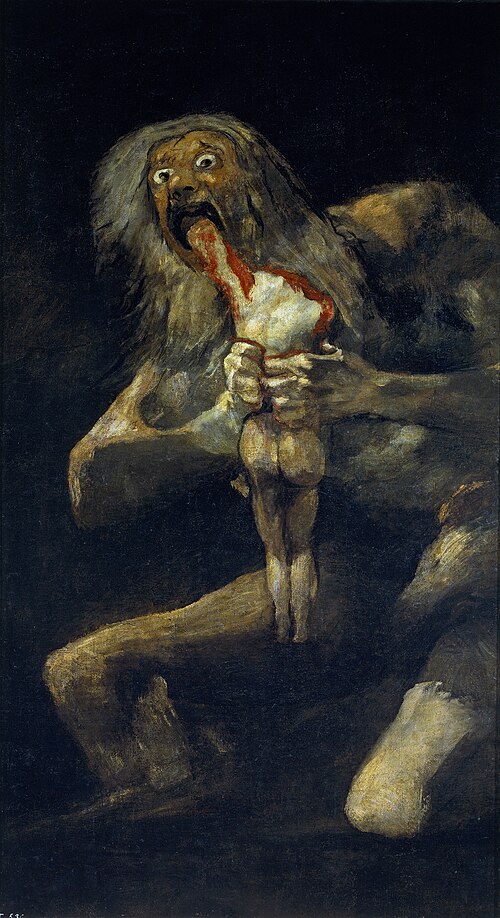
Figure 3. Forbidden snacks by Goya, or Saturn Devouring His Son (1820-23).
In contrast, Mary is a (successful?) therapist who suffers from some kind of post-traumatic stress, as she’s shown “going through the motions” at a party and ultimately needs a mysterious pill (a mood stabilizer, a tranquilizer, we don’t know) in order to function normally. But unlike Clark, whose addiction is insinuated to be the cause of his divorce and his spiraling personal downfall, Mary is shown to have a somewhat stable existence, though she is also hocking a bland self-help tape, which I would guess is a metaphor for her own inability to escape the trauma of being raised by a mother who was a hoarder, or perhaps schizophrenic, or agoraphobic (again, the mental illness is nebulous, as it would be seen through the eyes of a child). Fearful of Clark’s mad ramblings in their final therapy session and the related disappearance of his employees, Mary soon finds herself in the Backrooms as well, where she eventually finds Clark and the movie has its emotional and narrative climax at a horrifying version of the Alice in Wonderland tea table (before the remaining runtime devolves into a long, thrilling chase sequence).
The table scene is interesting for a variety of reasons: it is where Clark gets his revenge on his therapist (see, we don’t need to change!), and where he converts to being the antagonist, considering we find the head of his female assistant stashed in the refrigerator, which I found to be a disappointing lampshade rather than a clever inversion. The pacing here is both tense and dragging—the other Backrooms denizens he’s collected are certainly creepy, like a more adult version of the toys Sid makes in the original Toy Story (1995), though without any lines of dialogue they end up just being more surreal set pieces. Unfortunately, before there’s anything profound we can discover as an audience about the Backrooms, such as its relation to sanity, the relationship between the characters, or the shady corporation that’s been monitoring things the whole time, the Big Bad Pirate Clark stomps in, takes a satisfying bite out of his reality doppelganger, and then we don’t have to think anymore as we jump into a montage of delightfully terrifying scenes ranging from claustrophobia to acrophobia to general “geographical anxiety” (aka, being lost). The whole idea of being chased by something that looks like a mascot also gave me Five Nights at Freddy’s (2014) vibes, though you can’t blame these creators for knowing their teen audience.
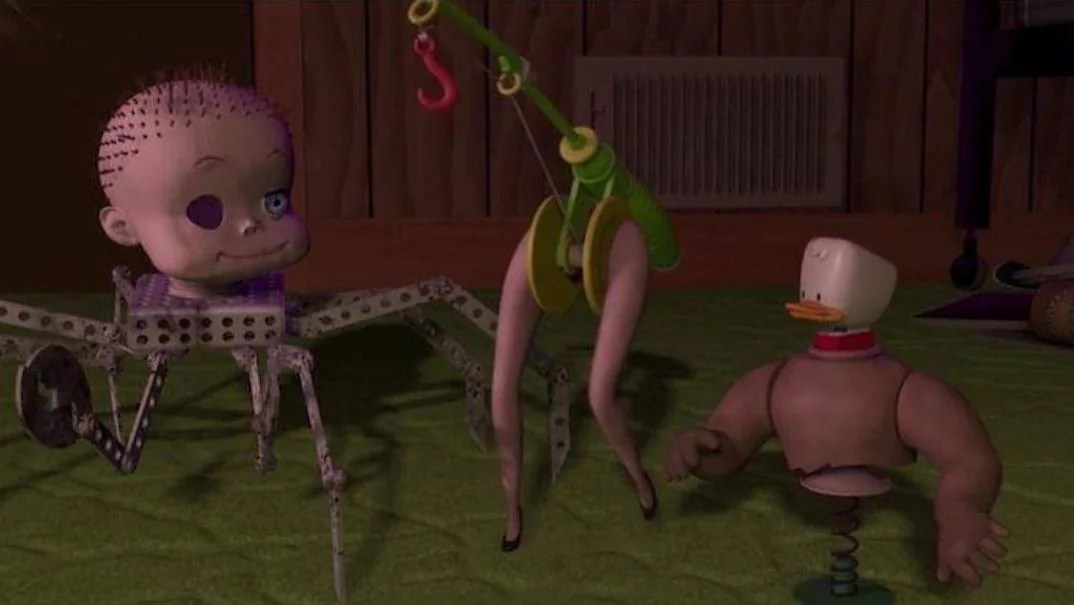
Figure 4. In hindsight, the woman’s crotch being a literal “hooker” is a bit off-putting (1995).
To conclude: a woman marries a man thinking she can change him, but she can’t. A man marries a woman thinking she won’t change, but she does. This idea is a bit of a modern twist on a classic line from Oscar Wilde’s The Picture of Dorian Gray (1890) (“Men marry because they are tired; women, because they are curious: both are disappointed”). Likewise, Clark is stuck and “unfixable” while Mary is killed (or at least, imprisoned) due to her curiosity by the film’s end. Backrooms doesn’t tread any new territory regarding psychology and gender here, and unfortunately, it’s popularity might be due in part to the fact that people don’t like their assumptions challenged; ironically, this movie follows the classic idea at the heart of all movie-making: give me the same thing, but make it different (Save the Cat, 2005).
Is This All a Metaphor for the Internet, or AI Slop, or Necrocapitalism, or…?
A large part of the enjoyment in the Backrooms is the space’s unexplainable nature, and Parsons does a solid job in this film leaving enough gaps for his audience to make their own theories. Parsons refers to himself as someone who was “chronically online,” so for me, it makes sense that the Backrooms are all a metaphor for the internet: they are a place that stretches forever, the content is twisted/degraded/synthetic, and there are monsters lurking around the edges (stalkers, groomers, the “dark web”, etc.). However, there are others who think that it’s a space imagined by some kind of artificial or alien intelligence, which explains why everything is a crude re-creation, a devolving iteration, with the idea of “generation loss” applied, Escher-like, to reality itself: it is real-life AI slop. Alternatively, those with a deep grudge against capitalism also see it as a rampant form of out-of-control manufacturing gone awry, something akin to Dick’s “Autofac” (1955), and anyone who’s seen empty office buildings surrounded by people without homes can’t help but feel the unfairness of this system also being part of the theory here…
After watching a series of interviews with Parsons, I do think he’s a young creator with a passion for this world, where he serves as something like a priest rather than a god, interpreting the internet lore and readjusting it with his own spin rather than creating it wholesale. If he were to read this review, I’d tell him to dig into more feminist horror to escape the masculine tropes that are always around the corners of the internet, read more Shirley Jackson and Angela Carter rather than Stephen King and Alfred Hitchcock—the more I think about this movie, the more I think it repeats a lot of the same gender stereotypes of Psycho (1960) at its core, which makes me realize how the Backrooms are a metaphor for understanding reality through fiction; they are endless corridors where we find the same horrors lurking around the edges: addiction, obsession, and punishment for being curious. Can’t Pandora (or Eve) be rewarded for seeking knowledge, for once? As I watch Mary trapped in the film’s final scene, a twisted version of herself that must be punished, I feel like giving huge movie budgets to young men raised by the Internet may not be doing any “consciousness raising,” and only continues to keep us trapped within those stained, tepid walls.
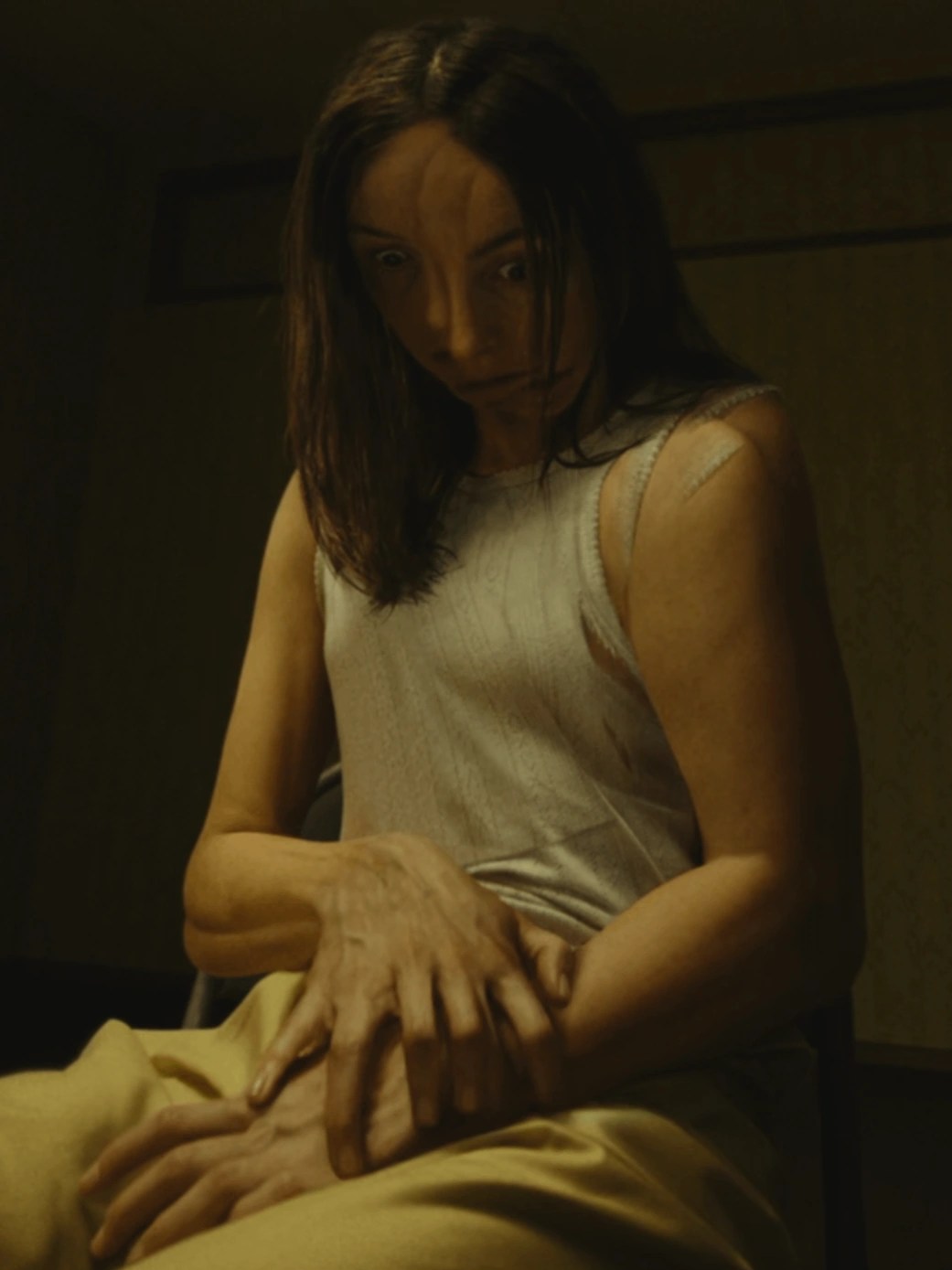
Figure 6. The AI can never quite get the hands right, particularly in this final scene (2026).
Author bio: Jess Flarity is a graduate of the Stonecoast MFA program and has a PhD in English from the University of New Hampshire. He currently works at three different colleges as an adjunct instructor and hopes to fall into the Backrooms soon.
NOTES
*Obsession (2026) is popular for similar reasons: it is Backrooms’ fraternal twin, detailing the tension of romantic relationships in the time of Gen Z—it is a sociological expression of unresolvable sexual and emotional desires rather than the psychological exploration of cognitive dissonance brought upon by limitless amounts of information. Both films also feature only four main characters instead of the usual six or more in these kinds of horror movies, reflecting the shrinking social world of modern teens due to the distancing effects of technology as well as the echoes of the isolation of the Covid pandemic.
**Considering that the studio, A24, bankrolled this almost-teen director with a $10 million budget, I’m certain that Soodik, a Hollywood veteran who worked on Westworld (2016-2022), heavily influenced this script. The narrative that a young phenom did it on his own certainly helps sell tickets, though; if you watch the big interviews Parsons does, such as on Jimmy Fallon, I’d say the media coaching team did some solid work there.
***Though Perkins Gilman is a celebrated early feminist, it should be noted that she also believed in eugenics and was extremely racist, a discussion that is nuanced and too often left out of high school conversations. It does not help that at the core of Backrooms, we have a Black man who becomes a monster and terrorizes a white woman…and while you could argue that race is irrelevant for this film, as the use of any racial stereotypes is pretty limited, we end up in a double-bind: casting both main characters as white could be considered a form of erasure, or if both were Black it could be seen as a form of Black-on-Black violence, etc. The fact that the mascot on the outside of Clark’s store is white while he (the owner) is Black could be interpreted as him wearing a “white mask” a la Frantz Fanon, though I will not be exploring subconscious racial tensions in the film, as this could be a separate essay all by itself.

